
Interview Prep Guide: Applied Science
Are you interested in learning more about the Applied Scientist interview process at Audible? Maybe you’re even starting to prepare for your own interview? If so, you’re in the right place. We’ve created this guide to help you prepare for a successful interview. You will get a look at the entire interview process, the types of questions to expect and the technology and tools you may use.
What does an Applied Scientist do at Audible?
Applied scientists work on and solve a broad array of practical problems, dramatically improving customer experience, reducing costs, and driving speed and automation. Audible has the drive of a start-up to implement cutting-edge machine learning solutions with the infrastructure of an established company to support their development.
We have a rich data environment for applied scientists to develop new models and algorithms, and use those to have an impact on the lives of millions of customers. Applied science is highly experimental and needs to be supported through strong theoretical analysis and associated process innovations.
Our applied scientists work closely with our software engineers to put algorithms into practice. We encourage careful consideration of modeling assumptions, a thorough review of Machine Learning (ML) literature, experimentation using state-of-the-art methods, and error-free scalable implementations.
The Process
To be considered for an applied scientist role, you must first submit a job application. If you meet the basic qualifications for the role, you’ll then complete a technical phone screening. Depending on the team and role, you may be asked to complete a second phone screening as well. If your technical phone screening is successful, a recruiter will contact you to arrange an interview loop. If your interview loop is successful, you’ll be made an offer.
Phone Screens
Depending on the role, you will have one to two technical phone screenings. A technical phone screening lasts 60 minutes and is with a senior leader on our team. The interviewer will ask you behavioral and technical questions.
Science Breadth Screen
During your Science Breadth interview, we'll assess your working knowledge across scientific disciplines and how you apply this knowledge to inform decisions and strategy. The interviewer will evaluate your understanding of concepts beyond your specialty area, your ability to present alternative approaches to scientific problems, and how effectively you reason through ambiguous challenges using fundamental principles. Be prepared to discuss methodologies outside your primary expertise and demonstrate how you can compare different scientific approaches.
To prepare, review scientific fundamentals that underpin research in your field and stay current with advancements in adjacent disciplines. Practice translating business problems into scientific frameworks and comparing different methodologies' strengths and weaknesses. Avoid common pitfalls like discussing techniques without understanding their underlying principles. The interview is interactive—think out loud, engage with the interviewer's hints, and demonstrate both your depth of knowledge and ability to make connections across scientific domains.
Technical Problem Solving and Coding Screen
As a scientist you should be able to implement modeling ideas that can be trained/tested on large-scale data. This requires a strong background in data structures and algorithms and the ability to write code.
Expect to be asked to write syntactically correct code in Python (no pseudo code). If you feel a bit rusty coding without an IDE or coding in Python, it’s probably a good idea to dust off the programming books and tutorials to get comfortable coding on a whiteboard or on paper.
Interview Loop
Your loop will include five 60 minute interviews where you’ll meet with members of our science community. You’ll have the chance to discuss your experiences and expertise in several areas that help us determine success at Audible.
These areas include both technical competencies and behavioral interview questions that are based off of Our People Principles, which different interviewers will be assigned to evaluate.
Technical Competencies
Domain Expertise - We’re curious about your area of expertise, whether it is Automatic Speech Recognition (ASR), Natural Language Understanding/Processing (NLU/NLP), Computer Vision (CV), Deep Learning (DL), Machine Learning (ML), or Statistical Modeling.
You’ll be expected to demonstrate a broad and deep knowledge of your research area and its literature, deep understanding of the field’s classical methods and your prior work, pros/ cons of modeling approaches, data sources, and practical experience in applying those research ideas to modeling problems.
ML Problem Solving/Application - Of course, we expect you to understand the basic ML methods and algorithms. It’s important that you revisit your favorite ML text books. However, it’s also important to apply those methods to real-world problems. For example, given a problem definition, you should be able to formulate it as an ML problem and propose a solution, including ideas for data sources, annotation, modeling approaches, and evaluation, and you should be able to discuss potential pitfalls and trade-offs.
Problem solving and coding - One of the most rewarding aspects of working in applied science is seeing your research make a positive impact on customers. As a scientist you should be able to implement modeling ideas that can be trained/tested on large-scale data. This requires a strong background in data structures and algorithms and ability to write code.
Audible applied scientists primarily code in Python and use a wide-set of internal tools to deploy the model files/code into production systems. However, in some cases where the latency is a primary constraint, they collaborate with SDEs within/outside their teams to take these models into production using Java/C/C++.
Expect to be asked to write syntactically correct code of your choice (no pseudo code). If you feel a bit rusty coding without an IDE or coding in a specific language, it’s probably a good idea to dust off the programming books and tutorials to get comfortable coding on a whiteboard or on paper.
Interviewer’s Expectation for Coding Exercise
Your interviewer’s expectation is for you to solve the problem with minimal hints. The interviewer will be interested in your thinking process and hearing your explanations before you start solving the question on the spot. You could start with a brute-force approach and later try to optimize it. Think out loud. Be vocal in your communication with your interviewer. Also, remember to ask clarifying questions.
Use Suitable Data Structures - Wherever applicable, pick up suitable data structures to solve the problem. For example, using Stack for parentheses validation solves the problem easier rather than using Heap. During preparation, try to learn as many data structures as possible.
Use Suitable Algorithms/ Techniques - Array is a simple data structure, but there are plenty of techniques/algorithms available to solve array problems optimally. Examples include Kadane’s Algorithm, Sliding Window Approach, Binary Search, etc. Learn as many algorithms as possible.
Deciding Your Final Approach - After coming up with different approaches, you should be able to determine trade-offs between them and choose the optimal option. Once you check with your interviewer on your final approach and start coding, you should be able to convert your approach into working code.
You can use any programming language of your choice, but always try to write in production quality—code hygiene really matters. Once you’re done writing the code, do a dry run. If there are any bugs, you should be able to identify them by yourself.
Key points to keep in mind:
• You should be able to convert your thoughts into coding and cover all edge cases
• You should understand time and space complexity
• Your code should be bug-free, readable, and modular
• You should demonstrate exposure to dynamic programming and coding convention
Our People Principles
A significant portion of each interview conversation will be dedicated to understanding how you’ve already been demonstrating Our People Principles in your own professional experiences. You should expect every interviewer to discuss multiple People Principles with you, and they may even ask multiple questions about each one.
• Familiarize yourself with our People Principles. There’s no need to memorize them.
• Prepare a few specific examples related to recent projects, team interactions, and product deliveries (avoid confidential information).
• Emphasize the importance of data and analytics in supporting your decisions, as Audible is data-driven.
• Highlight how your decisions or projects impacted customers and stakeholders, demonstrating customer obsession.
Behavioral Interview
Your remaining sessions will focus on behavioral and case-study-type questions tied to Our People Principles. Behavioral questions will sound like “Tell me about a time…” or “Give me an example…” A significant portion of each interview conversation will be dedicated to understanding how you’ve already been demonstrating Our People Principles in your own professional experiences. You should expect every interviewer to discuss multiple People Principles with you, and they may even ask multiple questions about each one.
We want to know how you’ve solved problems in the past, made decisions, motivated others, and changed your perspective on something. When answering, think about your storytelling, focusing on the “what” and the “how” of your experience, and the “why” of your decision-making.
How should I prepare for my interview?
First, read up on Our People Principles. These are what guide us every day as a company, from decisions that impact our business, customers, and community right down to the candidates we hire. You should definitely consider what each principle means to you, specifically, and how you’ve applied them in your professional life.
How should I best prepare for these questions?
First, consider some of the most memorable days in your previous professional experiences. Spend some time recalling the specific details of those circumstances (e.g., who, what, when, what challenges, what mistakes were made and corrected). Then, consider how you’ve applied one or more of the People Principles in those experiences.
Use specific examples to showcase your expertise, and demonstrate how you’ve taken risks, succeeded, failed and grown in the process. Keep in mind, some of Audible’s most successful programs have risen from the ashes of failed projects. Failure is a necessary part of innovation. It’s not optional. We understand that and believe in failing early and iterating until we get it right.
Download this guide to reflect on how you’ve already applied the People Principles in your professional experiences
How should I respond to questions using the STAR method?
While there are many ways to answer an interview question, we suggest following the STAR method. The STAR method enables you to provide the interviewer with the information they need to evaluate your past experiences and behaviors to determine your potential for success in the role and at Audible. So, let's break down the STAR framework.
Situation
Provide context and background for the situation that you were in. You should describe a specific event or situation, not a generalized description. This example can be from a previous job, school project, volunteer activity, or any relevant event. Be sure to give enough detail for the interviewer to understand the complexities of the situation.
Task
Describe the task that you needed to accomplish. What goal were you working toward? Be sure to consider quantitative and qualitative goals.
Action
Describe the actions you took to address the situation with an appropriate amount of detail, and keep the focus on you. Use the word “I,” not “we,” when describing actions. What specific steps did you take? What was your particular contribution? Be careful that you don’t describe what the team or group did when talking about a project. Let us know what you actually did.
Result
Describe the outcomes of your actions and don't be shy about taking credit. You should be able to answer: What happened? How did you measure success? What results did achieve? What trade-offs did you have to make to achieve this? What did you learn or what would you have done differently?
Note: In the event your initial response does not include each component of the STAR framework, interviewers will ask numerous follow-up questions to get at each STAR component.
Accommodations
Audible is committed to a diverse and inclusive workplace. Our inclusive culture empowers us to deliver the best results for our customers. For individuals with disabilities who would like to request an accommodation, please connect with your recruiter directly or visit this link.
For more information about our Interview and Hiring Process, click here.

Sue Shlapakovsky’s Team is Actively Shaping How Users Discover Content
As Head of Product Science, Discovery and MarTech, Sue Shlapakovsky leads Audible teams in harnessing AI and machine learning to ultra-personalize our customer experience, making it easier than ever to find the perfect listen.
Learn more
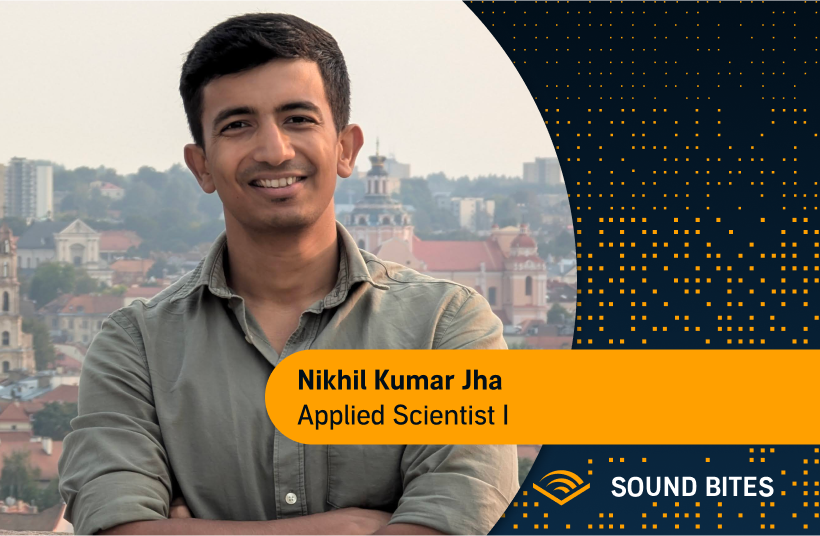
Sound Bites with Nikhil Kumar Jha
Nikhil Kumar Jha works as an Applied Scientist with the Product Science team at Audible's Berlin hub. He and his team help develop innovative solutions to customer needs by using data science, including Maven, the world’s first AI-powered audiobook search tool, which helps customers find listens that are right for them.
Learn more

Andrew Tsao, Head of Product, Data Science & Analytics, is Ever an Optimist
Andrew Tsao encourages his teams to keep a positive outlook, trusting that research and experimentation will get them closer to solutions as they imagine and invent on behalf of our customers.
Learn more
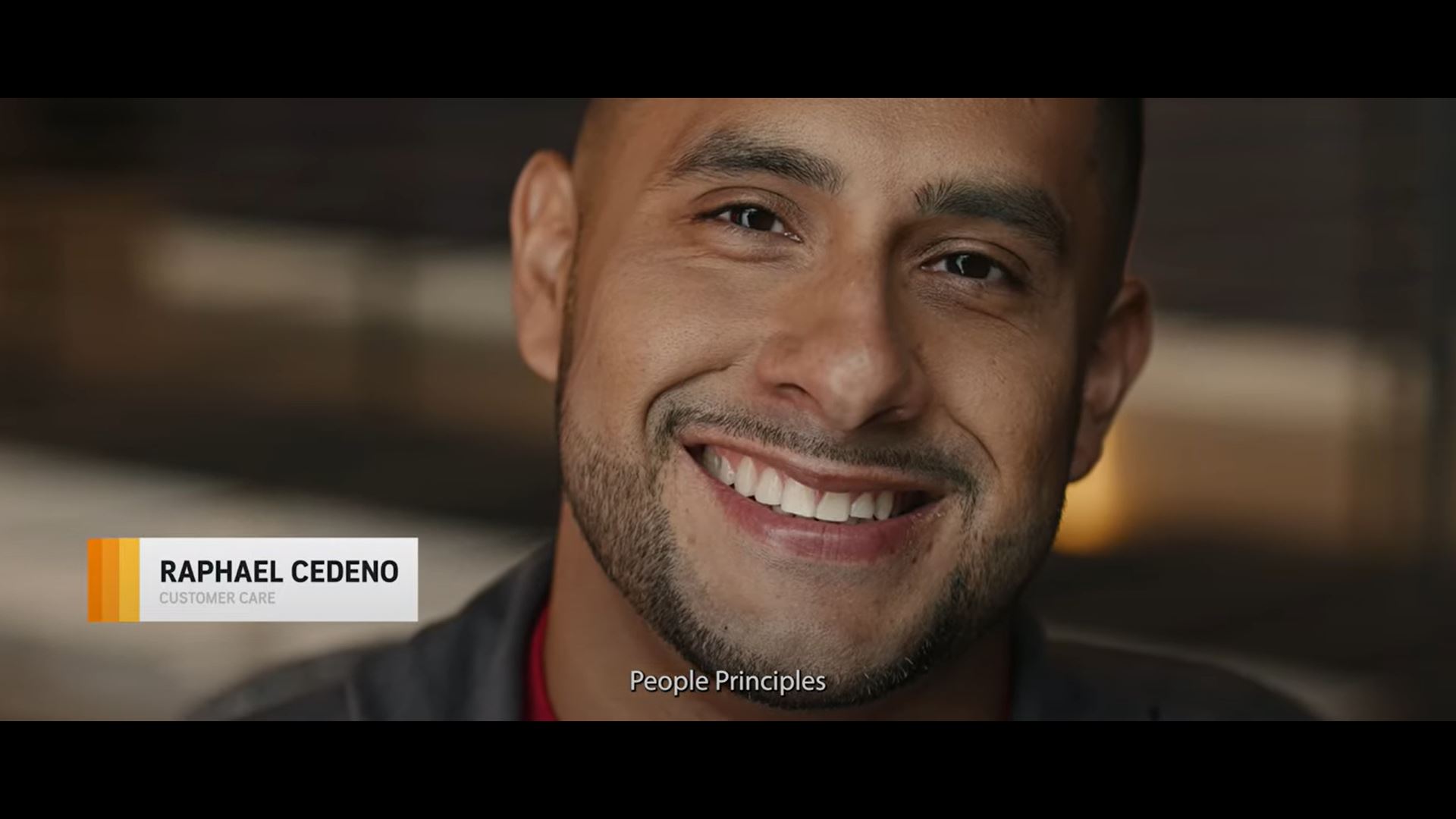
Be Customer Obsessed
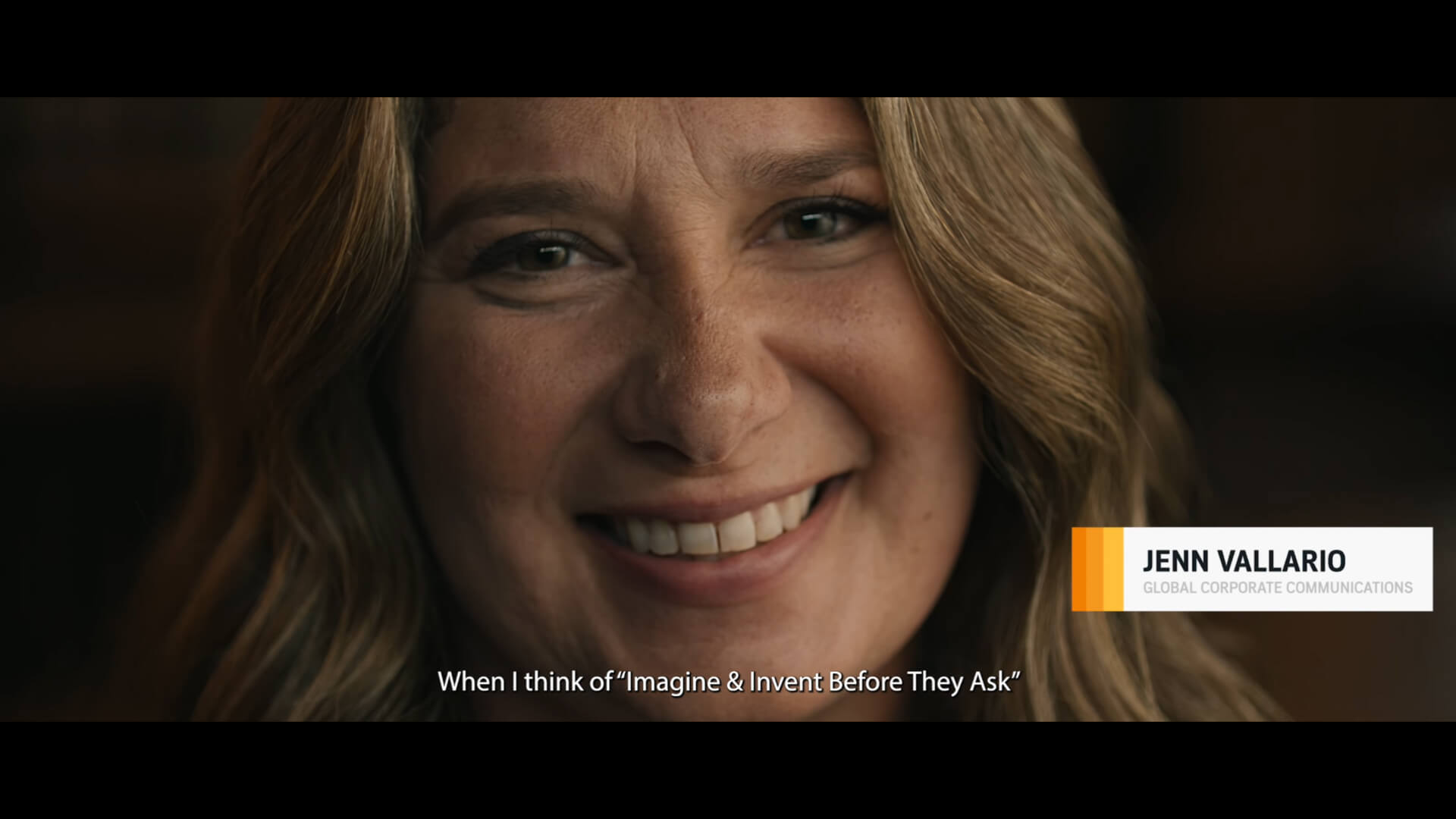
Imagine & Invent Before They Ask
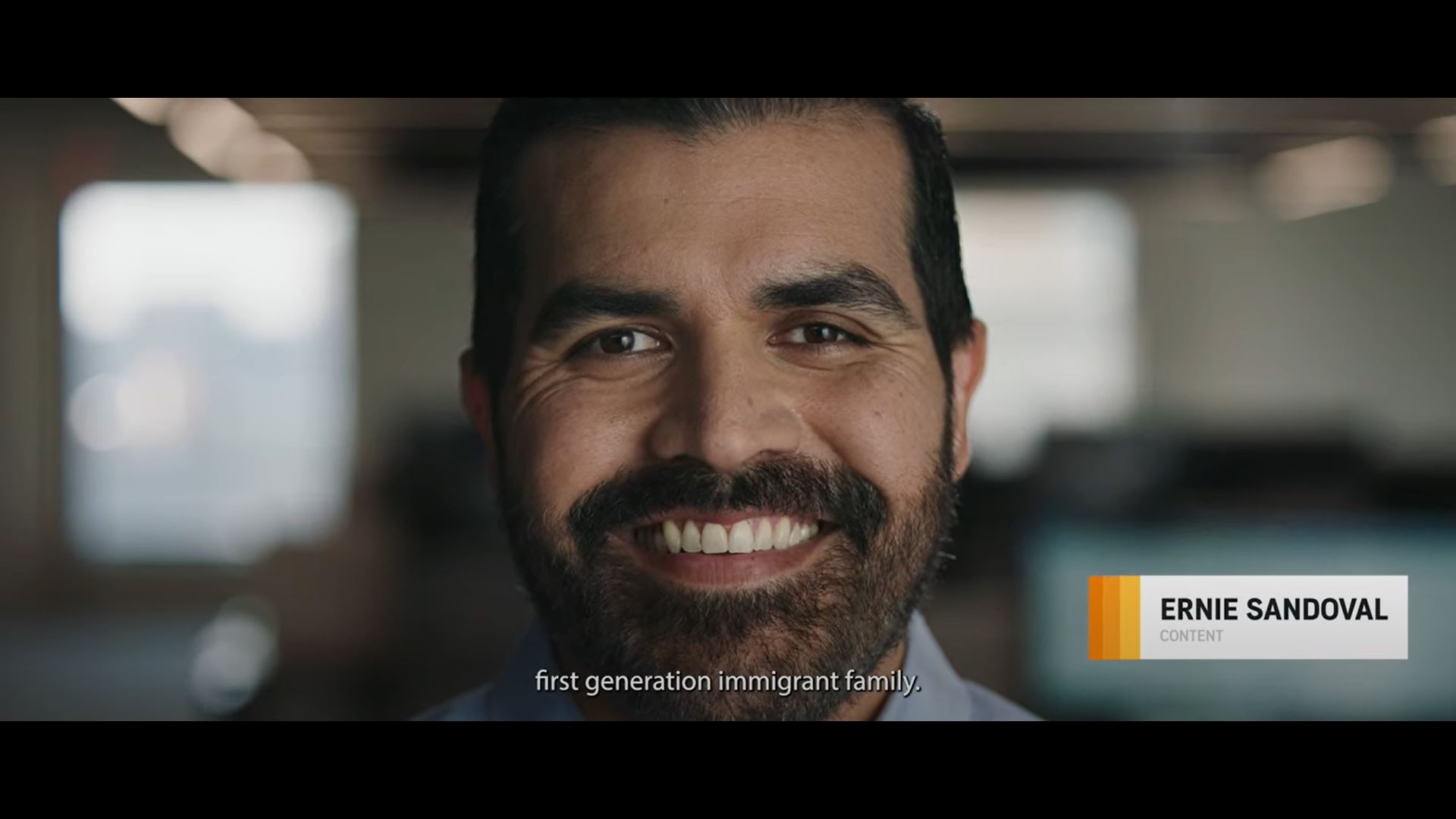
Articulate The Possible & Move Fast To Make It Real
Study & Draw Inspiration From Culture & Technology
Activate Caring
Audible's People Principles celebrate who we are and where we've been, and guide the way we work shoulder to shoulder to enhance the lives of our millions of customers around the world. They reflect and apply to everyone who works at Audible—the entrepreneurs and operators, the dreamers and the doers, those who have worked here for 25 years and those who have arrived in the past few weeks and months.
View all Our People Principles